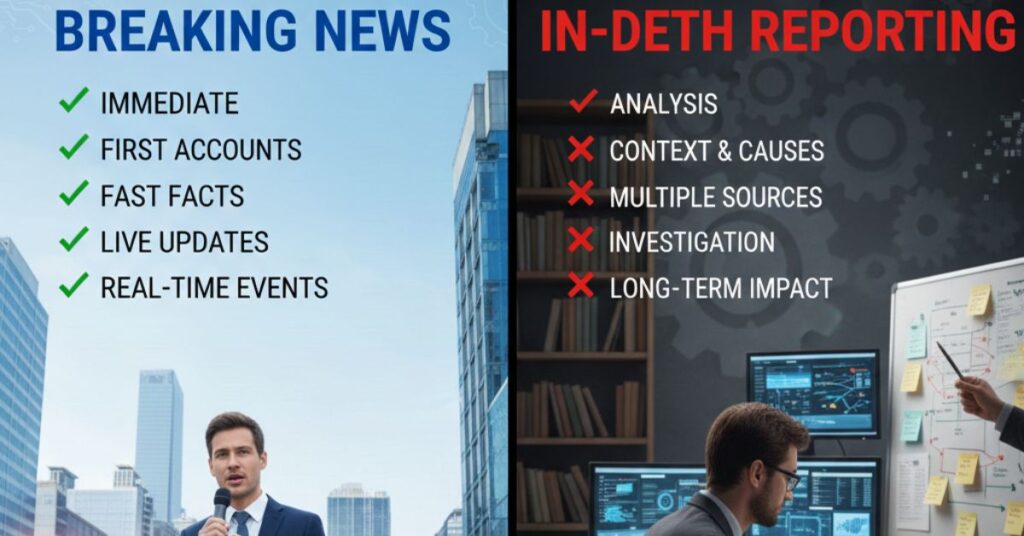
In today’s fast-paced digital world, information spreads quickly. News is shared within seconds through websites, social media, and messaging apps. Because of this speed, verifying information has become one of the most important responsibilities of news media.
News organizations follow careful processes to ensure that the information they publish is accurate, fair, and trustworthy. Understanding how news media verifies information helps readers recognize reliable journalism and avoid misinformation.
Why Verification Is Important in Journalism
Verification is the foundation of journalism. Without proper checks, false or misleading information can spread and cause harm.
Verification helps:
- Protect public trust
- Prevent misinformation
- Maintain journalistic credibility
When people trust the news, they can make informed decisions based on facts rather than rumors.
Using Reliable and Multiple Sources
One of the first steps in verifying information is checking sources. Journalists rely on credible and trustworthy sources for their reports.
Common sources include:
- Official statements
- Government documents
- Experts and professionals
- Eyewitness accounts
Good journalism requires using more than one source. If multiple independent sources confirm the same information, it is more likely to be accurate.
Fact-Checking Before Publishing
Fact-checking involves reviewing every detail of a story before it is published. This includes checking names, dates, locations, statistics, and quotes.
Fact-checking ensures:
- Correct information
- Accurate reporting
- Reduced errors
Many news organizations have dedicated fact-checkers whose job is to review content carefully.
Verifying Visual Content
Photos and videos can be misleading if taken out of context or edited. News media verify visual content before publishing it.
Verification steps include:
- Checking the original source
- Confirming the date and location
- Using digital tools to detect edits
This process helps prevent the spread of fake or manipulated visuals.
Cross-Checking Information
Cross-checking means comparing information with other reliable reports. Journalists often review coverage from other trusted news outlets.
This helps to:
- Confirm facts
- Identify inconsistencies
- Improve accuracy
Cross-checking adds another layer of reliability to news reporting.
Editorial Review and Approval
Before publication, most news stories go through an editorial process. Editors review content for accuracy, clarity, and balance.
Editors focus on:
- Verifying key facts
- Ensuring fair representation
- Checking legal and ethical issues
This review process helps maintain high journalistic standards.
Correcting Mistakes and Updates
Even with careful verification, mistakes can happen. Responsible news organizations correct errors openly.
Corrections may include:
- Updated articles
- Correction notes
- Clarified information
Transparency builds trust and shows accountability.
Avoiding Rumors and Unverified Claims
News media avoid publishing rumors, especially during breaking news events. Journalists wait for confirmation before reporting sensitive information.
This includes:
- Avoiding social media speculation
- Waiting for official confirmation
- Clearly labeling unconfirmed details
This approach helps reduce the spread of false information.
Role of Technology in Verification
Technology plays a growing role in verifying information. Digital tools help journalists analyze data, images, and online sources.
Technology assists with:
- Tracking the origin of content
- Analyzing data accuracy
- Monitoring misinformation trends
Digital platforms and media-focused communities like centre gagnant highlight how technology supports modern journalism and responsible information sharing.
Ethical Standards and Journalistic Codes
Most news organizations follow ethical guidelines and professional codes of conduct. These standards emphasize truth, fairness, and responsibility.
Ethical journalism includes:
- Avoiding bias
- Respecting privacy
- Reporting with integrity
These values guide journalists in verifying and presenting information correctly.
The Role of Journalists’ Experience
Experienced journalists develop strong instincts for spotting unreliable information. Training and professional experience help them ask the right questions.
Experienced reporters:
- Identify red flags
- Verify claims more efficiently
- Understand complex issues
Their judgment plays a key role in maintaining accuracy.
How Readers Can Support Verified News
Readers also play a role in supporting verified journalism by choosing reliable news sources.
Helpful habits include:
- Reading from trusted outlets
- Checking multiple sources
- Avoiding sharing unverified content
An informed audience encourages higher standards in journalism.
Conclusion
News media verifies information through careful sourcing, fact-checking, cross-checking, editorial review, and ethical standards. These steps help ensure that the news people consume is accurate and reliable.
In an age of fast information and online rumors, verification remains essential. Understanding how news media verifies information helps readers trust credible journalism and avoid misinformation.
Read Also: Impact of Social Media on Modern Journalism