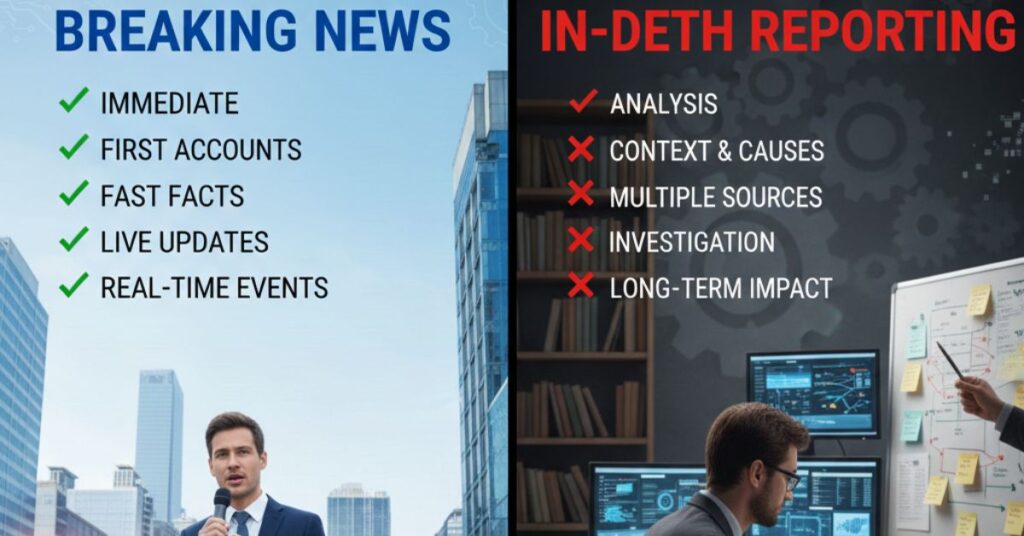
Social media has transformed how news is created, shared, and consumed. Platforms like Facebook, Twitter, Instagram, and TikTok allow information to reach millions instantly. This has changed modern journalism in both positive and challenging ways.
From breaking news alerts to audience engagement, social media influences the speed, style, and distribution of news. Understanding this impact is important for journalists and readers alike.
Faster News Distribution
One of the biggest impacts of social media is speed. News now spreads almost instantly to global audiences.
Social media helps by:
- Sharing breaking news in real-time
- Alerting users to updates immediately
- Allowing journalists to post live from events
This speed keeps people informed but also increases the risk of spreading unverified or incomplete information.
Wider Audience Reach
Social media expands the reach of journalism beyond traditional outlets like newspapers or TV. Anyone with an internet connection can access news online.
Advantages include:
- Reaching global audiences instantly
- Engaging younger readers
- Allowing small news outlets to gain visibility
Even local stories can gain national or international attention through social sharing.
Direct Audience Engagement
Social media allows journalists to interact directly with readers. Comments, shares, likes, and polls give immediate feedback.
Engagement benefits include:
- Understanding audience preferences
- Encouraging discussions on important topics
- Building trust and community around news outlets
This two-way communication changes how journalists approach reporting.
Rise of Citizen Journalism
Social media enables ordinary people to report events as they happen. Citizen journalism has become an important part of modern news coverage.
Citizen reporters can:
- Share eyewitness accounts
- Post photos or videos from the scene
- Highlight underreported stories
While this increases coverage, it also requires careful verification to avoid misinformation.
Challenges with Misinformation
The speed and accessibility of social media also create challenges. Fake news, rumors, and misleading posts can spread quickly before verification.
Challenges include:
- Difficulty distinguishing real news from false content
- Rapid viral spread of unverified stories
- Pressure on journalists to respond quickly
Responsible journalism must balance speed with accuracy to maintain credibility.
Influence on Storytelling Style
Social media has changed how stories are told. Short-form content, videos, and visuals are now more common to capture attention online.
Modern storytelling includes:
- Infographics and visuals
- Short video clips
- Attention-grabbing headlines
While engaging, this trend can sometimes oversimplify complex issues.
Data Analytics and Audience Insights
Social media provides data that helps journalists understand what readers want. Analytics track clicks, shares, engagement, and demographics.
Data insights allow journalists to:
- Improve content relevance
- Tailor topics to audience interest
- Measure the impact of stories
This feedback loop makes journalism more audience-focused than ever.
Challenges for Traditional Media
Traditional news outlets face pressure to adapt to social media trends. They must compete with fast online updates and viral content.
Challenges include:
- Keeping up with digital platforms
- Avoiding clickbait while staying relevant
- Maintaining quality journalism under time pressure
Despite these challenges, integrating social media is essential for modern news outlets.
Ethics and Credibility Concerns
Social media can blur the line between opinion, promotion, and verified news. Journalists must be careful to uphold standards.
Key ethical considerations:
- Verifying information before posting
- Avoiding biased or sensationalist content
- Clearly labeling sponsored or opinion content
Maintaining credibility is crucial in an era of instant news.
Social Media as a Source and Amplifier
Many journalists now use social media both as a source and as a platform to amplify news. Twitter threads, Instagram stories, and live videos provide unique opportunities to share stories quickly and widely.
Platforms and media communities like centre gagnant demonstrate how social media supports modern reporting and audience engagement while highlighting the need for responsible content sharing.
The Future of Journalism on Social Media
Social media will continue to shape journalism in the years to come. Artificial intelligence, algorithm-driven feeds, and new platforms will influence how news is consumed.
Future trends include:
- Increased use of multimedia storytelling
- Greater reliance on social engagement metrics
- More collaboration between professional and citizen journalists
Journalists who adapt to these trends while maintaining credibility will thrive.
Conclusion
Social media has had a profound impact on modern journalism. It allows faster news distribution, wider audience reach, direct engagement, and new storytelling styles. At the same time, it introduces challenges like misinformation, ethical dilemmas, and pressure on traditional media.
Balancing speed, accuracy, and audience engagement is the key to responsible journalism in the social media era. Platforms like centre gagnant show how digital tools can support modern reporting while emphasizing the importance of verification and ethical standards.
Read Also: Why Media Literacy Is Important Today